 Christopher Allen
985af10f6e
Christopher Allen
985af10f6e
* chore(build): Add "all" modules for blocks & generators

These modules (Blockly.blocks.all and Blockly.<Generator>.all) will
be the entry points for the corresponding chunks.

They also make it easier to pull in all the modules in each package
(e.g. for playground and tests).

It is necessary to set the Closure Compiler dependency_mode to
SORT_ONLY as otherwise it tries to compile the "all" modules before
their dependencies, which fails.

The only impact on the _compressed.js files is the addition of a short
string to the very end of each file, e.g.:

    var module$exports$Blockly$JavaScript$all={};

* chore(deps): Add devDependency on closure-calculate-chunks

* feat(build): First pass at chunked complation

Add a new buildCompiled gulp target (npm run build:compiled) that
uses closure-calculate-chunks to do chunked compliation of core/,
blocks/ and generators/ all in a single pass.

This work is incomplete: the resulting *_compressed.js files don't
(yet) have UMD wrappers.

* chore(build): Generate chunk wrappers

A first pass; this does not have support for a namespace object yet.

* refactor(build): Use chunked compilation by default

Remove old "compressed" gulp tasks in favour of new "compiled" task.

* chore(build): Remove cruft from buildCompiled

Remove unneeded `done` parameter and commented-out options that had
been cargo-culted from the old build pipeline.

* fix(build): Fix test failures caused by new build pipeline

- Exclude closure/goog/base.js from compiler input; use
  externs/goog-externs.js instead.

- Have the build:debug and build:strict targets only build the first
  chunk (blockly_compressed.js).

- Fix namespace entries for blocks and generators.

* fix(build): Fix build failures on node v12

closure-calculate-chunks requires node.js v14 or later.

When running on node.js v14 or later have getChunkOptions save
the output of closure-calculate-chunks to
scripts/gulpfiles/chunks.json.  When running on older versions of
node.js have it use this checked-in, cached output instead of
attempting to run closure-calculate-chunks.

* chore(build): enable --rename_prefix_namespace

This will allow modules in blocks/ and generators/ to use
goog.require to obtain the exports object of goog.modules from
core/.

* fix(build): Always build all chunks

The previous commit enabled --rename_prefix_namespace option to
Closure Compiler, and this causes the buildCompressed target to
work fine when run without --debug or --strict, but adding either
of those flags (as for example when `npm test` runs
`npm run build:debug`) causes an issue:

- Because of many compiler errors in blocks/ and generators/,
  a previous commit added a hack to only build the first chunk
  when doing debug/strict builds.

- When asked to build only one chunk, Closure Compiler ignores the
  --rename_prefix_namespace flag, because it 'correctly' infers
  that there are no later chunks that will need to access global
  variables from the first chunk.

- This causes a test failure, because `npm test` first runs
  `npm run build`, which generates a valid blockly_compressed.js,
  but this is then overrwritten by an invalid one when it next runs
  `npm run build:debug`.

  (The invalid one is missing all `$.` prefixes on 'global' variables,
  including on Blockly, so the wrapper's last two lines -
  "$.Blockly.internal_ = $;" and "return $.Blockly" - fail.)

The fix is to add appropriate @suppress annotations to blocks/*.js and
generators/**/*.js and then remove the first-chunk-only hack.

* refactor(build): Just build once

Since the previous commit caused `npm run build:debug` to do
everything that `... build:compressed` does - and to produce
byte-for-byte identical output - it doesn't make sense to run
both when testing.  To that end:

- Replace the build:debug and build:strict package scripts that
  did `gulp buildCompressed --...` with new scripts build-debug
  and build-strict that do `gulp build --...` instead.

  (The target names are changed so as to extend our existing naming
  convention as follows: a target named "foo:bar" does some sub-part
  of the job done by target "foo", but a target named "foo-bar" does
  all the work of the target "foo" with some extra options.)

- build:debug:log and build:strict:log are similarly replaced with
  build-debug-log and build-strict-log.

- Modify run_all_tests.js to just do `npm run build-debug` instead of
  doing both `npm run build` and `npm run build:debug`.

- Also remove the 'build:blocks' script that should have been removed
  when the buildBlocks gulp task was deleted previously.

* refactor(build): Compile with base_minimal.js instead of base.js

Introduce a (very!) cut-down version of closure/goog/base.js named
base_minimal.js that is used as input to the compiler as an
alternative to using externs/goog-externs.js (which will be deleted
once the buildAdvancedCompilationTest target has been updated).

This will allow use of goog.setTestOnly since it will now exist in
compiled mode, and allows the changes made in 5b112db to filter
base.js out of the files for the first chunk to be reverted.
(It also obliges a change to the compiled-mode check in blockly.js.)

* fix(build): Fix buildAdvanceCompilationTest

- In build_tasks.js:
  - Replace the old compile() function with a new one factored out of
    buildCompiled().
  - Update buildAdvancedCompilationTest to use the new compile()
    and other helpers created in the meantime.
  - Remove no-longer-used maybeAddClosureLibrary().

- Remove externs/{block,generator,goog}-externs.js, which are no longer
  used by any compile pipeline.

- Update core/blockly.js to fix issue with detection of compiled mode
  when using ADVANCED_OPTIMISATIONS.

- Update only other use of globalThis, in core/utils/xml.js, to
  consistently treat it as a dictionary object.

- Update instructions in tests/compile/index.html.

This commit is sort-of-a-prerequisite to #5602; test:compile:advanced
was previously working but the generated `main_compresed.js` would
throw errors upon loading.
Blockly 
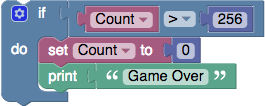
Google's Blockly is a library that adds a visual code editor to web and mobile apps. The Blockly editor uses interlocking, graphical blocks to represent code concepts like variables, logical expressions, loops, and more. It allows users to apply programming principles without having to worry about syntax or the intimidation of a blinking cursor on the command line. All code is free and open source.
Getting Started with Blockly
Blockly has many resources for learning how to use the library. Start at our Google Developers Site to read the documentation on how to get started, configure Blockly, and integrate it into your application. The developers site also contains links to:
Help us focus our development efforts by telling us what you are doing with Blockly. The questionnaire only takes a few minutes and will help us better support the Blockly community.
Installing Blockly
Blockly is available on npm.
npm install blockly
For more information on installing and using Blockly, see the Getting Started article.
Getting Help
- Report a bug or file a feature request on GitHub
- Ask a question, or search others' questions, on our developer forum. You can also drop by to say hello and show us your prototypes; collectively we have a lot of experience and can offer hints which will save you time. We actively monitor the forums and typically respond to questions within 2 working days.
blockly-samples
We have a number of resources such as example code, demos, and plugins in another repository called blockly-samples. A plugin is a self-contained piece of code that adds functionality to Blockly. Plugins can add fields, define themes, create renderers, and much more. For more information, see the Plugins documentation.
Contributing to Blockly
Want to make Blockly better? We welcome contributions to Blockly in the form of pull requests, bug reports, documentation, answers on the forum, and more! Check out our Contributing Guidelines for more information. You might also want to look for issues tagged "Help Wanted" which are issues we think would be great for external contributors to help with.
Releases
The next major release will be September 30th, 2021.
We release by pushing the latest code to the master branch, followed by updating the npm package, our docs, and demo pages. We typically release a new version of Blockly once a quarter (every 3 months). If there are breaking bugs, such as a crash when performing a standard action or a rendering issue that makes Blockly unusable, we will cherry-pick fixes to master between releases to fix them. The releases page has a list of all releases.
Releases are tagged by the release date (YYYYMMDD) with a leading '4.' and a trailing '.0' in case we ever need a major or patch version (such as 2.20190722.1). Releases that have breaking changes or are otherwise not backwards compatible will have a new major version. Patch versions are reserved for bug-fix patches between scheduled releases.
We now have a beta release on npm. If you'd like to test the upcoming release, or try out a not-yet-released new API, you can use the beta channel with:
npm install blockly@beta
As it is a beta channel, it may be less stable, and the APIs there are subject to change.
Branches
There are two main branches for Blockly.
master - This is the (mostly) stable current release of Blockly.
develop - This is where most of our work happens. Pull requests should always be made against develop. This branch will generally be usable, but may be less stable than the master branch. Once something is in develop we expect it to merge to master in the next release.
other branches: - Larger changes may have their own branches until they are good enough for people to try out. These will be developed separately until we think they are almost ready for release. These branches typically get merged into develop immediately after a release to allow extra time for testing.
New APIs
Once a new API is merged into master it is considered beta until the following release. We generally try to avoid changing an API after it has been merged to master, but sometimes we need to make changes after seeing how an API is used. If an API has been around for at least two releases we'll do our best to avoid breaking it.
Unreleased APIs may change radically. Anything that is in develop but not master is subject to change without warning.
Issues and Milestones
We typically triage all bugs within 2 working days, which includes adding any appropriate labels and assigning it to a milestone. Please keep in mind, we are a small team so even feature requests that everyone agrees on may not be prioritized.
Milestones
Upcoming release - The upcoming release milestone is for all bugs we plan on fixing before the next release. This typically has the form of year_quarter_release (such as 2019_q2_release). Some bugs will be added to this release when they are triaged, others may be added closer to a release.
Bug Bash Backlog - These are bugs that we're still prioritizing. They haven't been added to a specific release yet, but we'll consider them for each release depending on relative priority and available time.
Icebox - These are bugs that we do not intend to spend time on. They are either too much work or minor enough that we don't expect them to ever take priority. We are still happy to accept pull requests for these bugs.
Good to Know
- Cross-browser Testing Platform and Open Source <3 Provided by Sauce Labs
- We support IE11 and test it using BrowserStack