 Ben Henning
f68081bf60
Ben Henning
f68081bf60
## The basics

- [x] I [validated my changes](https://developers.google.com/blockly/guides/contribute/core#making_and_verifying_a_change)

## The details
### Resolves

Fixes #8922
Fixes #8929
Fixes part of #8771

### Proposed Changes

This PR introduces support for fields to be focusable (and thus navigable with keyboard navigation when paired with downstream changes to `LineCursor` and the keyboard navigation plugin). This is a largely isolated change in how it fundamentally works:
- `Field` was updated to become an `IFocusableNode`. Note that it uses a specific string-based ID schema in order to ensure that it can be properly linked back to its unique block (which helps make the search for the field in `WorkspaceSvg` a bit more efficient). This could be done with a globally unique ID, instead, but all fields would need to be searched vs. just those for the field's parent block.
- The drop-down and widget divs have been updated to manage ephemeral focus with `FocusManager` when they're open for non-system dialogs (ephemeral focus isn't needed for system dialogs/prompts since those already take/restore focus in a native way that `FocusManager` will respond to--this may require future work, however, if the restoration causes unexpected behavior for users). This approach was done due to a suggestion from @maribethb as the alternative would be a more complicated breaking change (forcing `Field` subclasses to properly manage ephemeral focus). It may still be the case that certain cases will need to do so, but widget and drop-down divs seem to address the majority of possibilities.

**Important**: `Input`s are not explicitly being supported here. As far as I can tell, we can't run into a case where `LineCursor` tries to set an input node, though perhaps I simply haven't come across this case. Supporting `Fields` and `Connections` (per #8928) seems to cover the main needed cases, though making `Input`s focusable may be a future requirement.

### Reason for Changes

This is part of an ongoing effort to ensure key components of Blockly are focusable so that they can be keyboard-navigable (with other needed changes yet both in Core Blockly and the keyboard navigation plugin).

Note that #8929 isn't broadly addressed since making widget & drop down divs manage ephemeral focus directly addresses a large class of cases. Additional cases may arise where a plugin or Blockly integration may require additional effort to make keyboard navigation work for their field--this may be best addressed with documentation and guidance.

### Test Coverage

No new tests have been added. It's certainly possible to add unit tests for the focusable configurations being introduced in this PR, but it may not be highly beneficial. It's largely assumed that the individual implementations should work due to a highly tested FocusManager, and it may be the case that the interactions of the components working together is far more important to verify (that is, the end user flows). The latter is planned to be tackled as part of #8915.

### Documentation

No new documentation is planned, however it may be prudent to update the field documentation in the future to explain how to utilize ephemeral focus when specifically building compatibility for keyboard navigation.

### Additional Information

This includes changes that have been pulled from #8875.
Blockly
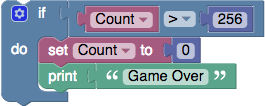
Google's Blockly is a library that adds a visual code editor to web and mobile apps. The Blockly editor uses interlocking, graphical blocks to represent code concepts like variables, logical expressions, loops, and more. It allows users to apply programming principles without having to worry about syntax or the intimidation of a blinking cursor on the command line. All code is free and open source.
Getting Started with Blockly
Blockly has many resources for learning how to use the library. Start at our Google Developers Site to read the documentation on how to get started, configure Blockly, and integrate it into your application. The developers site also contains links to:
Help us focus our development efforts by telling us what you are doing with Blockly. The questionnaire only takes a few minutes and will help us better support the Blockly community.
Installing Blockly
Blockly is available on npm.
npm install blockly
For more information on installing and using Blockly, see the Getting Started article.
Getting Help
- Report a bug or file a feature request on GitHub
- Ask a question, or search others' questions, on our developer forum. You can also drop by to say hello and show us your prototypes; collectively we have a lot of experience and can offer hints which will save you time. We actively monitor the forums and typically respond to questions within 2 working days.
blockly-samples
We have a number of resources such as example code, demos, and plugins in another repository called blockly-samples. A plugin is a self-contained piece of code that adds functionality to Blockly. Plugins can add fields, define themes, create renderers, and much more. For more information, see the Plugins documentation.
Contributing to Blockly
Want to make Blockly better? We welcome contributions to Blockly in the form of pull requests, bug reports, documentation, answers on the forum, and more! Check out our Contributing Guidelines for more information. You might also want to look for issues tagged "Help Wanted" which are issues we think would be great for external contributors to help with.
Releases
We release by pushing the latest code to the master branch, followed by updating the npm package, our docs, and demo pages. If there are breaking bugs, such as a crash when performing a standard action or a rendering issue that makes Blockly unusable, we will cherry-pick fixes to master between releases to fix them. The releases page has a list of all releases.
We use semantic versioning. Releases that have breaking changes or are otherwise not backwards compatible will have a new major version. Patch versions are reserved for bug-fix patches between scheduled releases.
We now have a beta release on npm. If you'd like to test the upcoming release, or try out a not-yet-released new API, you can use the beta channel with:
npm install blockly@beta
As it is a beta channel, it may be less stable, and the APIs there are subject to change.
Branches
There are two main branches for Blockly.
master - This is the (mostly) stable current release of Blockly.
develop - This is where most of our work happens. Pull requests should always be made against develop. This branch will generally be usable, but may be less stable than the master branch. Once something is in develop we expect it to merge to master in the next release.
other branches: - Larger changes may have their own branches until they are good enough for people to try out. These will be developed separately until we think they are almost ready for release. These branches typically get merged into develop immediately after a release to allow extra time for testing.
New APIs
Once a new API is merged into master it is considered beta until the following release. We generally try to avoid changing an API after it has been merged to master, but sometimes we need to make changes after seeing how an API is used. If an API has been around for at least two releases we'll do our best to avoid breaking it.
Unreleased APIs may change radically. Anything that is in develop but not master is subject to change without warning.
Issues and Milestones
We typically triage all bugs within 1 week, which includes adding any appropriate labels and assigning it to a milestone. Please keep in mind, we are a small team so even feature requests that everyone agrees on may not be prioritized.
Good to Know
- Cross-browser Testing Platform and Open Source <3 Provided by Sauce Labs
- We test browsers using BrowserStack