mirror of
https://github.com/alankrantas/microbit-micropython-cookbook.git
synced 2026-01-07 21:02:12 +01:00

692 lines
20 KiB
Markdown
692 lines
20 KiB
Markdown
# micro:bit V2 MicroPython Cookbook (Updating)
|
|
|
|
|
|
|
|
This is the collection of notes, tricks and experiments on BBC micro:bit V2 and MicroPython.
|
|
|
|
See also [BBC micro:bit V2 MicroPython documentation](https://microbit-micropython.readthedocs.io/en/v2-docs/index.html)
|
|
|
|
Also there are a few projects:
|
|
|
|
* Simon Says game ([link](https://github.com/alankrantas/microbit-micropython-cookbook/tree/master/simon_game))
|
|
* Shake It game ([link](https://github.com/alankrantas/microbit-micropython-cookbook/tree/master/shake_it))
|
|
* Simple micro:bit RC Car ([link](https://github.com/alankrantas/microbit-micropython-cookbook/tree/master/rc_car))
|
|
|
|
---
|
|
|
|
## About micro:bit's MicroPython
|
|
|
|
micro:bit's MicroPython is developed by Damien George. Like all other MicroPython variants, it is based on Python 3.4 and has most of the built-ins in a standard CPython 3.4. Of course, this also means features from newer Python and a lot of modules (built-in libraries) are unavaliable (for example, no f-string and dictionaries would still store value pairs with random order). There are also modules designed specifically for micro:bit or general microcontrollers.
|
|
|
|
As MicroPython is a dynamic/interpreted language like CPython, it is slower than Arduino's C++ and requires more memory. If the firmware does not exist on the micro:bit, the official editor would install it as well. The user script cannot be too long and is very easy to run out of memory on micro:bit V1 (which has only 16 KB RAM). For micro:bit V2 (128 KB RAM) this is no longer a big problem. Nevertheless, Bluetooth support are still unavailable in both V1/V2 version.
|
|
|
|
## Ask Help From REPL
|
|
|
|
REPL (Read-Evaluate-Print-Loop) or "Serial" in the official editor is a very useful testing tool, although it is in fact a standard Python feature. You may need to press Ctrl + C in the REPL screen to force the device enter REPL mode.
|
|
|
|
Get some help:
|
|
|
|
```
|
|
> help()
|
|
```
|
|
|
|
List all MicroPython modules:
|
|
|
|
```
|
|
> help('modules')
|
|
```
|
|
|
|
To see what's inside a module or submodule/function/attribute:
|
|
|
|
```
|
|
> import microbit
|
|
> help(microbit)
|
|
> help(microbit.pin0)
|
|
> dir(microbit)
|
|
> dir(microbit.pin0)
|
|
```
|
|
|
|
## Easter Eggs
|
|
|
|
Try to type these in the REPL:
|
|
|
|
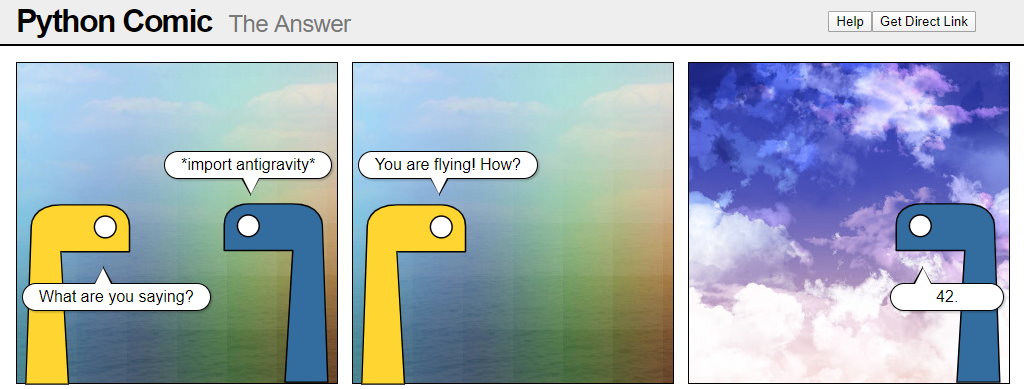
```
|
|
> import this
|
|
> import antigravity
|
|
> import love
|
|
```
|
|
|
|
## Import * is a Bad Idea
|
|
|
|
In a lot of examples you may see
|
|
|
|
```python
|
|
from microbit import *
|
|
```
|
|
|
|
Which means to import everything under "microbit" so you can use them without using ```microbit.something```.
|
|
|
|
Import normally does not "read" a module or function into memory; what it really does is to add variables pointing to all the stuff under module "microbit". (The exceptions are some C++ based Python packages which have to be loaded upon being imported, which are common among data science packages, but there is no way to install these on the micro:bits anyway.)
|
|
|
|
But using * to import everything is still a bad practice. If you do this in standard Python, you might accidentally import things with conflicted names. Instead, you *should always* explicitly import what you need:
|
|
|
|
```python
|
|
from microbit import pin0, display, sleep
|
|
```
|
|
|
|
## How Much Memory Left?
|
|
|
|
```python
|
|
from micropython import mem_info
|
|
|
|
print(mem_info(1))
|
|
```
|
|
|
|
You can also use garbage collection to free some memory:
|
|
|
|
```python
|
|
import gc
|
|
|
|
gc.enable() # enable automatic memory recycle
|
|
gc.collect() # force memory recycle
|
|
```
|
|
|
|
### Classic Blinky (LED screen)
|
|
|
|
```python
|
|
from microbit import display, Image, sleep
|
|
|
|
while True:
|
|
display.show(Image.HEART)
|
|
sleep(1000)
|
|
display.clear()
|
|
sleep(1000)
|
|
```
|
|
|
|
## Classic Blinky (LED on pin 0)
|
|
|
|
This version controls an external LED connected between pin 0 and GND and uses ```time.sleep()``` module instead of ```microbit.sleep()```.
|
|
|
|
```python
|
|
from microbit import pin0
|
|
import time
|
|
|
|
while True:
|
|
pin0.write_digital(1)
|
|
time.sleep(0.5)
|
|
pin0.write_digital(0)
|
|
time.sleep(0.5)
|
|
```
|
|
|
|
For both micro:bit V1/V2 you don't really need a resistor to protect the LED. The voltage and current from any pins (except the 3V pin) are low enough.
|
|
|
|
## Blinky LEDs Without Using Sleep
|
|
|
|
Using the ```time``` module to make the two LEDs on the LED screen blink at different intervals in the same loop.
|
|
|
|
```python
|
|
from microbit import display
|
|
import time
|
|
|
|
delay1, delay2 = 500, 400
|
|
since1, since2 = time.ticks_ms(), time.ticks_ms()
|
|
|
|
|
|
while True:
|
|
|
|
now = time.ticks_ms()
|
|
|
|
if time.ticks_diff(now, since1) >= delay1: # toogle LED (0, 0)
|
|
display.set_pixel(0, 0, 9 if display.get_pixel(0, 0) == 0 else 0)
|
|
since1 = time.ticks_ms()
|
|
|
|
if time.ticks_diff(now, since2) >= delay2: # toogle LED (4, 4)
|
|
display.set_pixel(4, 4, 9 if display.get_pixel(4, 4) == 0 else 0)
|
|
since2 = time.ticks_ms()
|
|
```
|
|
|
|
## A More Convenient Pin Class?
|
|
|
|
Define a Pin class to wrap existing pin methods.
|
|
|
|
```python
|
|
from microbit import pin1, pin2, sleep
|
|
|
|
class Pin:
|
|
|
|
__slots__ = ['pin'] # not to use dictionary to store attributes in the class to save memory
|
|
|
|
def __init__(self, pin):
|
|
self.pin = pin
|
|
|
|
def setPin(self, value):
|
|
self.pin.write_digital(value)
|
|
|
|
def setPWM(self, value):
|
|
self.pin.write_analog(value)
|
|
|
|
def getPin(self):
|
|
self.pin.set_pull(self.pin.NO_PULL)
|
|
return self.pin.read_digital()
|
|
|
|
def getADC(self):
|
|
try:
|
|
return self.pin.read_analog()
|
|
except:
|
|
return 0
|
|
|
|
def isPressed(self):
|
|
self.pin.set_pull(self.pin.PULL_UP)
|
|
return not self.pin.read_digital()
|
|
|
|
def isTouched(self): # for pin_logo
|
|
try:
|
|
self.pin.set_pull(self.pin.NO_PULL)
|
|
return self.pin.is_touched()
|
|
except:
|
|
return False
|
|
|
|
|
|
led = Pin(pin1) # external led at pin 1
|
|
button = Pin(pin2) # external button at pin 2
|
|
|
|
while True:
|
|
# light up LED when button is pressed
|
|
led.setPin(button.isPressed())
|
|
sleep(50)
|
|
```
|
|
|
|
See the following link for available pin functions:
|
|
|
|
* [micro:bit pins](https://makecode.microbit.org/device/pins)
|
|
* [Edge Connector Pins](https://tech.microbit.org/hardware/edgeconnector/#edge-connector-pins)
|
|
* [pin functions in MicroPython](https://microbit-micropython.readthedocs.io/en/v2-docs/pin.html#pin-functions)
|
|
|
|
The class would set internal pull-up for reading button status with ```isPressed()```. The buttons can be connected to one pin and GND without physical resistors. The onboard A/B buttons already have built-in resistors.
|
|
|
|
For controlling external LEDs, it is recommended to add a resistor (at least 220Ω for micro:bit V1 and 100Ω for V2) between the micro:bit pin and the LED anode leg.
|
|
|
|
## Simpler Alternate Pin Class
|
|
|
|
Use **namedtuple** (a tuple that elements have attribute names) as a simple Pin class. We point the pin methods to these attributes.
|
|
|
|
```python
|
|
from microbit import pin1, pin2, sleep
|
|
from ucollections import namedtuple
|
|
|
|
Pin = namedtuple('Pin', ['setPin', 'setPWM', 'getPin', 'getADC', 'isTouched'])
|
|
|
|
def newPin(pin, pull_up=False):
|
|
pin.set_pull(pin.PULL_UP if pull_up else pin.NO_PULL)
|
|
return Pin(pin.write_digital, pin.write_analog, pin.read_digital, pin.read_analog, pin.is_touched)
|
|
|
|
|
|
led = newPin(pin1)
|
|
button = newPin(pin2, pull_up=True)
|
|
|
|
while True:
|
|
led.setPin(not button.getPin())
|
|
sleep(50)
|
|
```
|
|
|
|
## Value Mapping
|
|
|
|
Translate a value in a range to its corresponding value in anoher range, similar to **map()** in Arduino or micro:bit MakeCode. Borrowed from [here](https://stackoverflow.com/questions/1969240/mapping-a-range-of-values-to-another).
|
|
|
|
```python
|
|
from microbit import display, sleep
|
|
|
|
def translate(value, leftMin, leftMax, rightMin, rightMax):
|
|
leftSpan = leftMax - leftMin
|
|
rightSpan = rightMax - rightMin
|
|
valueScaled = float(value - leftMin) / float(leftSpan)
|
|
return rightMin + (valueScaled * rightSpan)
|
|
|
|
|
|
while True:
|
|
lightLevel = display.read_light_level()
|
|
print(translate(lightLevel, 0, 255, 0, 1023))
|
|
sleep(100)
|
|
```
|
|
|
|
## Roll a Dice
|
|
|
|
Define dice images in a dictionary, and retrieve one using a random number when the shake gesture detected.
|
|
|
|
```python
|
|
from microbit import display, Image, accelerometer, sleep
|
|
from random import randint
|
|
|
|
dice = { # dictionary of 5x5 dice images
|
|
1: '00000:00000:00900:00000:00000',
|
|
2: '90000:00000:00000:00000:00009',
|
|
3: '90000:00000:00900:00000:00009',
|
|
4: '90009:00000:00000:00000:90009',
|
|
5: '90009:00000:00900:00000:90009',
|
|
6: '90009:00000:90009:00000:90009',
|
|
}
|
|
|
|
while True:
|
|
if accelerometer.was_gesture('shake'): # if user has shaked micro:bit
|
|
display.show(Image(dice[randint(1, 6)])) # get a image in random
|
|
```
|
|
|
|
## Fill LED Display
|
|
|
|
Light up every LEDs in a specific brightness level (default max):
|
|
|
|
```python
|
|
from microbit import display, Image, sleep
|
|
|
|
def fillScreen(b=9): # fill screen function, b = brightness (0-9)
|
|
display.show(Image(':'.join([str(b) * 5] * 5)))
|
|
|
|
|
|
while True:
|
|
# blink screen twice
|
|
for _ in range(2):
|
|
fillScreen() # default = max brightness
|
|
sleep(250)
|
|
display.clear()
|
|
sleep(250)
|
|
|
|
sleep(500)
|
|
|
|
# fade in
|
|
for i in range(10):
|
|
fillScreen(i)
|
|
sleep(75)
|
|
|
|
# fade out
|
|
for i in reversed(range(10)):
|
|
fillScreen(i)
|
|
sleep(75)
|
|
|
|
sleep(500)
|
|
```
|
|
|
|
## LED Bar Graph
|
|
|
|
A 25-level LED progress bar, similar to the one you can use in the MakeCode JavaScript editor.
|
|
|
|
```python
|
|
from microbit import display, Image, sleep
|
|
|
|
def plotBarGraph(value, max_value, b=9):
|
|
order = (23, 21, 20, 22, 24,
|
|
18, 16, 15, 17, 19,
|
|
13, 11, 10, 12, 14,
|
|
8, 6, 5, 7, 9,
|
|
3, 1, 0, 2, 4,)
|
|
counter = 0
|
|
display.clear()
|
|
for y in range(5):
|
|
for x in range(5):
|
|
if value / max_value > order[counter] / 25:
|
|
display.set_pixel(x, y, b)
|
|
counter += 1
|
|
|
|
while True:
|
|
plotBarGraph(display.read_light_level(), 255)
|
|
sleep(50)
|
|
```
|
|
|
|
The LED screen may flicker since ```read_light_level()``` uses LEDs themselves as light sensors (see [this video](https://www.youtube.com/watch?v=TKhCr-dQMBY) for explanation).
|
|
|
|
## Tiny Two-Digit Display
|
|
|
|
Display two 2x5 digits (range 0~99) on the 5x5 matrix. This is very similar to a MakeCode extension.
|
|
|
|
```python
|
|
from microbit import display, Image, sleep, temperature
|
|
|
|
digits = {
|
|
'0': ('99', '99', '99', '99', '99'),
|
|
'1': ('09', '09', '09', '09', '09'),
|
|
'2': ('99', '09', '99', '90', '99'),
|
|
'3': ('99', '09', '99', '09', '99'),
|
|
'4': ('90', '90', '99', '09', '09'),
|
|
'5': ('99', '90', '99', '09', '99'),
|
|
'6': ('90', '90', '99', '99', '99'),
|
|
'7': ('99', '09', '09', '09', '09'),
|
|
'8': ('99', '99', '00', '99', '99'),
|
|
'9': ('99', '99', '99', '09', '09'),
|
|
' ': ('00', '00', '00', '00', '00'),
|
|
}
|
|
|
|
def showDigits(value, b=9, fill_zero=False):
|
|
value = min(max(value, 0), 99)
|
|
d = ('{:02d}' if fill_zero else '{:2d}').format(value)
|
|
return Image(':'.join(
|
|
['{}0{}'.format(digits[d[0]][i], digits[d[1]][i]).replace('9', str(b))
|
|
for i in range(5)]))
|
|
|
|
|
|
while True:
|
|
display.show(showDigits(temperature(), fill_zero=True))
|
|
sleep(1000)
|
|
```
|
|
|
|
In ```showDigits()```, parameter b is brightness (0~9) and fill_zero=True means numbers smaller than 10 will be displayed as 01, 02, 03...
|
|
|
|
## Get Pitch and Roll Degrees
|
|
|
|
This is another functionality exists in MakeCode but not in MicroPython. Be noted that the results would be outputed in the REPL console and it's +-180 decrees instead of 360 degrees.
|
|
|
|
```python
|
|
from microbit import accelerometer, sleep
|
|
from math import pi, atan2, sqrt
|
|
|
|
def rotationPitch():
|
|
return atan2(
|
|
accelerometer.get_y(),
|
|
sqrt(accelerometer.get_x() ** 2 + accelerometer.get_z() ** 2)
|
|
) * (180 / pi)
|
|
|
|
def rotationRoll():
|
|
return atan2(
|
|
accelerometer.get_x(),
|
|
sqrt(accelerometer.get_y() ** 2 + accelerometer.get_z() ** 2)
|
|
) * (180 / pi)
|
|
|
|
|
|
while True:
|
|
print('Pitch:', rotationPitch(), ' / roll:', rotationRoll())
|
|
sleep(100)
|
|
```
|
|
|
|
## Servo Control
|
|
|
|
Be noted that a SG90 hobby servo comsumes a few hundred mA and the 3.3V pin from micro:bit V1 (90 mA) is barely enough. Use an external 5V power instead, or use micro:bit V2 (200 mA at 3.3V pin).
|
|
|
|
```python
|
|
from microbit import pin0, sleep
|
|
|
|
class Servo: # define a servo class
|
|
def __init__(self, pin, degree=90):
|
|
self.pin = pin
|
|
self.degree = degree
|
|
self.write(degree)
|
|
|
|
def write(self, degree):
|
|
self.pin.set_analog_period(20)
|
|
self.pin.write_analog(round((degree * 92 / 180 + 30), 0))
|
|
|
|
|
|
servo = Servo(pin0) # servo object
|
|
|
|
while True:
|
|
servo.write(0)
|
|
sleep(1000)
|
|
servo.write(180)
|
|
sleep(1000)
|
|
```
|
|
|
|
Do not use servos and buzzers at the same time. They require different PWM frequencies and most microcontrollers can only use one frequency accross all pins at a time.
|
|
|
|
micro:bit V2 can output 190 mA from its 3V pin, which is enough for most hobby servos.
|
|
|
|
## NeoPixel Rainbow/Rotation Effect
|
|
|
|
This code is based on Adafruit's example with adjustable brightness level. Change the NeoPixel (WS281x) data pin from pin0 to other pins if needed. (You can power the LED strips with 3.3V pin, although V1 can output less power than V2. One NeoPixel LED at full power may comsume as much as 50 mA. Running in low light level is recommended.)
|
|
|
|
```python
|
|
from microbit import pin0, sleep # connect to pin 0
|
|
from neopixel import NeoPixel
|
|
from micropython import const
|
|
|
|
led_num = const(12) # number of NeoPixels
|
|
led_maxlevel = const(64) # light level (0-255)
|
|
led_delay = const(5) # NeoPixels cycle delay
|
|
|
|
np = NeoPixel(pin0, led_num)
|
|
|
|
def wheel(pos):
|
|
r, g, b = 0, 0, 0
|
|
if pos < 0 or pos > 255:
|
|
r, g, b = 0, 0, 0
|
|
elif pos < 85:
|
|
r, g, b = 255 - pos * 3, pos * 3, 0
|
|
elif pos < 170:
|
|
pos -= 85
|
|
r, g, b = 0, 255 - pos * 3, pos * 3
|
|
else:
|
|
pos -= 170
|
|
r, g, b = pos * 3, 0, 255 - pos * 3
|
|
r = round(r * led_maxlevel / 255)
|
|
g = round(g * led_maxlevel / 255)
|
|
b = round(b * led_maxlevel / 255)
|
|
return (r, g, b)
|
|
|
|
def rainbow_cycle(pos):
|
|
for i in range(led_num):
|
|
rc_index = (i * 256 // led_num) + pos
|
|
np[i] = wheel(rc_index & 255)
|
|
np.show()
|
|
|
|
|
|
pos = 0
|
|
while True:
|
|
rainbow_cycle(pos)
|
|
pos = (pos + 1) % 255
|
|
sleep(led_delay)
|
|
```
|
|
|
|
### Calcualte Fibonacci Sequence
|
|
|
|
[Fibonacci sequence](https://en.wikipedia.org/wiki/Fibonacci_number)
|
|
|
|
```python
|
|
from microbit import display
|
|
|
|
def Fibonacci(n): # calculate nth number
|
|
a = 0
|
|
b = 1
|
|
for i in range(n - 2):
|
|
a, b = b, a + b
|
|
return b
|
|
|
|
f = Fibonacci(42)
|
|
print(f)
|
|
display.scroll(f)
|
|
```
|
|
|
|
Below is the recursive version, which is a lot slower and you may get ```RuntimeError: maximum recursion depth exceeded``` for a bigger number, especially in micro:bit V1.
|
|
|
|
```python
|
|
from microbit import display
|
|
|
|
def Fibonacci(n):
|
|
if n < 2:
|
|
return n
|
|
return Fibonacci(n - 1) + Fibonacci(n - 2)
|
|
|
|
|
|
f = Fibonacci(24)
|
|
print(f)
|
|
display.scroll(f)
|
|
```
|
|
|
|
### Calcuate a List of Prime Numbers
|
|
|
|
Prime numbers (except 2, 3) are either 6n - 1 or 6n + 1. So we check if a number of 6n - 1/6n + 1 can be divided with any existing primes in the list. If not, it is a prime number and can be added to the list.
|
|
|
|
```python
|
|
from microbit import display
|
|
|
|
def find_primes(n): # calculate primes up to n
|
|
primes = [2, 3]
|
|
for p in range(6, n + 1, 6):
|
|
for p_test in range(p - 1, p + 2, 2):
|
|
for prime in primes:
|
|
if p_test % prime == 0:
|
|
break
|
|
else: # only execute when for is not exited by break
|
|
primes.append(p_test)
|
|
return primes
|
|
|
|
primes = find_primes(50)
|
|
print(primes)
|
|
for prime in primes:
|
|
display.scroll(prime)
|
|
```
|
|
|
|
## Morse Code Machine
|
|
|
|
This allows you to enter your message into micro:bit and convert it to Morse code with the LED screen and buzzer. Go to the REPL mode and you'll see the promot.
|
|
|
|
```python
|
|
from microbit import display, Image, set_volume, sleep
|
|
from micropython import const
|
|
import music
|
|
|
|
set_volume(255) # speaker volume (0-255)
|
|
morse_delay = const(75) # morse code delay speed
|
|
|
|
# morse code table
|
|
morse_code = {
|
|
'A': '.-',
|
|
'B': '-...',
|
|
'C': '-.-.',
|
|
'D': '-..',
|
|
'E': '.',
|
|
'F': '..-.',
|
|
'G': '--.',
|
|
'H': '....',
|
|
'I': '..',
|
|
'J': '.---',
|
|
'K': '-.-',
|
|
'L': '.-..',
|
|
'M': '--',
|
|
'N': '-.',
|
|
'O': '---',
|
|
'P': '.--.',
|
|
'Q': '--.-',
|
|
'R': '.-.',
|
|
'S': '...',
|
|
'T': '-',
|
|
'U': '..-',
|
|
'V': '...-',
|
|
'W': '.--',
|
|
'X': '-..-',
|
|
'Y': '-.--',
|
|
'Z': '--..',
|
|
'1': '.----',
|
|
'2': '..---',
|
|
'3': '...--',
|
|
'4': '....-',
|
|
'5': '.....',
|
|
'6': '-....',
|
|
'7': '--...',
|
|
'8': '---..',
|
|
'9': '----.',
|
|
'0': '-----',
|
|
}
|
|
|
|
while True:
|
|
|
|
print('Enter your message: (Press enter to exit)')
|
|
msg_str = input('> ').upper()
|
|
if not msg_str:
|
|
break
|
|
|
|
morse_str = ''.join([morse_code[s] for s in msg_str
|
|
if s in morse_code])
|
|
print('Message converted:\n', morse_str)
|
|
|
|
for code in morse_str:
|
|
music.pitch(392)
|
|
display.show(Image.TARGET)
|
|
sleep(morse_delay * (3 if code == '-' else 1))
|
|
music.stop()
|
|
display.clear()
|
|
sleep(morse_delay)
|
|
|
|
print('')
|
|
```
|
|
|
|
## Text-based Group Chat
|
|
|
|
Load the code to at multiple micro:bits, each connected to a computer and enter the REPL mode. They will display any messages (250 characters max each) sent by other micro:bits on the same channel.
|
|
|
|
In order to send message, press A and enter text after the prompt. (Some incoming messages may be lost when you are typing. So you can also treat this as actual radio and use [procedure words](https://en.wikipedia.org/wiki/Procedure_word).)
|
|
|
|
```python
|
|
RADIO_CHANNEL = 42
|
|
|
|
from microbit import display, Image, button_a, sleep
|
|
import radio
|
|
|
|
radio.config(group=RADIO_CHANNEL, length=250, power=7)
|
|
radio.on()
|
|
|
|
print('Receiving messages...')
|
|
print('Press A to send your message (max 250 characters each)')
|
|
display.show(Image.RABBIT)
|
|
|
|
while True:
|
|
|
|
if button_a.is_pressed():
|
|
text = input('Enter your message: ')
|
|
if len(text) > 0 and len(text.strip()) > 0:
|
|
to_be_send = text.strip()[:250]
|
|
radio.send(to_be_send)
|
|
print('YOU:', to_be_send)
|
|
else:
|
|
sleep(100)
|
|
|
|
incoming = radio.receive()
|
|
if incoming != None:
|
|
print('MESSAGE:', incoming)
|
|
|
|
sleep(50)
|
|
```
|
|
|
|
## Radio Proximity Sensor
|
|
|
|
Load the code to two micro:bits. They will detect each other's radio signal strength and show it as LED bar graph. Can be used as an indoor treasure hunt game.
|
|
|
|
(This also works for micro:bit V1, however V1 is slower so there will be signal gap received by V2. So in order to mix V1 and V2, You'll have to either speed up V1 or slow down V2 loop delay.)
|
|
|
|
Due to some reason, the signal strength or RSSI changes very little regardless of transmite power. So I roughly remapped the value to 0-60 so that you can see the changes more clearly.
|
|
|
|
If there's no signal received the strength data would be set as zero.
|
|
|
|
```python
|
|
RADIO_CHANNEL = 42
|
|
|
|
from microbit import display, sleep
|
|
import radio
|
|
|
|
def plotBarGraph(value, max_value, b=9):
|
|
order = (23, 21, 20, 22, 24,
|
|
18, 16, 15, 17, 19,
|
|
13, 11, 10, 12, 14,
|
|
8, 6, 5, 7, 9,
|
|
3, 1, 0, 2, 4,)
|
|
counter = 0
|
|
display.clear()
|
|
for y in range(5):
|
|
for x in range(5):
|
|
if value / max_value > order[counter] / 25:
|
|
display.set_pixel(x, y, b)
|
|
counter += 1
|
|
|
|
|
|
radio.config(group=RADIO_CHANNEL, power=7)
|
|
radio.on()
|
|
|
|
while True:
|
|
|
|
radio.send('0')
|
|
strength = 0.0
|
|
data = radio.receive_full()
|
|
|
|
if data:
|
|
strength = data[1] + 255 - 155
|
|
|
|
print('Signal strength:', strength)
|
|
plotBarGraph(strength, 60)
|
|
sleep(50)
|
|
```
|